

2.00pm to 4.00pm - £5. Please come early for starting at 2.00.
Meditation has always been a vital necessity for man. It enables the practitioner to maintain a more peaceful state. It quietens the brain to allow the mind to surface, increasing clarity of thought and creative thinking. It also helps us to develop spiritually.
The meetings commence with a short description of the method we recommend followed by a session of joint meditation ending with a discussion about people's findings and personal experiences.
To achieve a deep level of spiritual meditation we use a simple technique, called "The Round Breath". Although this method is simple, good meditation is not easily achieved without practice. Part of the methods we teach involve visualisation techniques to help transcend into a deep state of meditation, and all these procedures can be quickly adopted by the beginner. There is nothing difficult or complicated about learning meditation.
Used daily, meditation will help you attain a more peaceful life, enabling you to deal better with stress, help you gain a greater clarity of thought and also assist in maintaining your physical health.
All of the problems which have been raised with us appear to be that people are unable to subjugate the brain to the mind, that is to say the brain insists on being heard.
Fear of letting go - if one has reached the transcendent state in sinking into meditation, then fear is no longer a real factor.
I think one wants to find the reference point between contemplation and meditation. It is true to say that contemplation is very pleasant, but it is something that can be done at any time - sitting in a car or train,looking out of the window, listening to music. Certainly it is relaxing but meditation has got to be worked on.
We are told some have difficulty in going down deep inside because they cannot visualise it. To say "go inside yourself" is symbolic of Man's search. One does not try to visualise it, one merely attempts to enter into inner consciousness and use it as a means of entering into meditation.
Difficulty in accepting that one is capable of reaching the id. If one knows oneself then one is aware that everyone is capable of reaching the id point.
If a person can enter the state of meditation without visualisation, because perhaps visualisation is disturbing to them, then it is not a must that they us the visualisation method. A student is always told to go into meditation the way in which it is most comfortable for them.
It is not a pre-requisite of reaching meditation that one should 'see' anything. If we do see some symbols or feel that our mind has taken us to other places and the places are comfortable and good to see we use it, but it is not a must.
The most important part of any approach to meditation is quietening the brain. This does need extreme concentration and application of the mind, but it can be done and the results are very worthwhile, since with the brain out of the way we can go most easily into complete and deep relaxation.
Although we have mentioned bringing out light and people say that they find difficulty in doing this, I cannot understand the statement that they have difficulty since unless they can see their own light they are really unaware whether they have done this or not. Therefore I again say - please concentrate on quietening the brain.
If one can only reach the contemplative state there is nothing wrong with this. It is quite therapeutic and one should just continue with that in the hope that eventually it will lead to meditation.
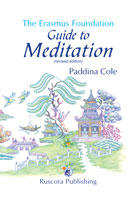
A good guide to medtation practice with many meaningful visualisations.
A visualisation to help with the meditation.
For further spiritual guidance, help and advice.
and also, Aid to Meditation.
Spiritual Meditation video

Copyright 2004 The Erasmus Foundation.
The Erasmus Foundation, Moat House, Banyards Green, Laxfield, Suffolk. IP13 8ER. Tel: 01986 798682.
Registered charity no.281458